

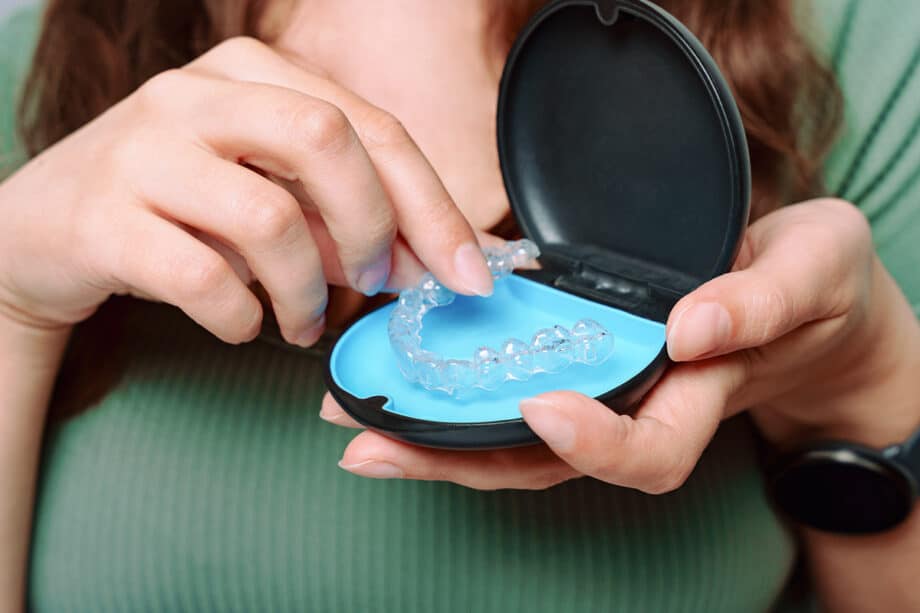
Your smile is one of a kind—and so are the tooth movement concerns that come with it. If you have been holding off on treatment because you are unsure whether clear aligners can handle your particular situation, you are not alone. Many patients arrive with that exact question, and we are glad to put your mind at ease: modern aligner therapy covers a far broader range of alignment concerns than most people expect—comfortably, discreetly, and with a level of precision that makes the journey feel manageable right from the start.
We put together this guide to walk you through how Invisalign® tackles three of the most common tooth movement concerns: crowding and spacing, bite relationships, and rotation with vertical positioning. Each section explains what the condition involves, how clear aligners correct it, and what you can expect at every stage—so you arrive at your first appointment feeling informed, at ease, and ready to take a confident step toward the smile you deserve.
Correcting Crowding and Spacing
Crowding and spacing sit at opposite ends of the same spectrum, yet clear aligners manage both with equal effectiveness. Crowding develops when your jaw lacks enough room for all your teeth, causing them to overlap or twist out of position. Spacing shows up when gaps open between teeth, leaving openings that many patients would prefer to close. Beyond aesthetics, both conditions affect how thoroughly you clean your teeth day to day—making alignment about health as much as appearance.
To correct either concern, clear aligners apply steady, calibrated pressure that nudges teeth into better positions over time. For crowded teeth, the aligners open space and guide each tooth into its proper place. For gaps, they draw neighboring teeth closer together until the spacing resolves. Our team maps every stage of movement in advance using precise digital planning tools, so you always know what comes next—and you can preview your projected outcome before treatment starts.
What this means for you
- Crowding: Aligners reduce overlap and make it easier to clean between teeth.
- Spacing: Aligners close gaps for a more even, natural-looking smile.
- Predictability: Digital planning lets you see your projected result before treatment begins.
Improving Bite Relationships
A bite issue refers to how your upper and lower teeth come together—and when that relationship is off, it affects more than comfort. Patients with bite problems often notice uneven tooth wear, jaw tension, or difficulty chewing certain foods. Left unaddressed, a poor bite can strain the jaw joints and surrounding muscles over time. Clear aligners correct several bite concerns through a carefully staged approach that shifts teeth gradually toward a healthier alignment.
Here are the main bite relationships aligners can help correct:
- Overbite: The upper front teeth cover the lower front teeth too much. Aligners reposition the teeth to bring the overlap into a healthier range.
- Underbite: The lower teeth protrude in front of the upper teeth. In appropriate cases, aligners shift the teeth toward a more balanced relationship.
- Crossbite: Certain upper teeth sit inside the lower teeth rather than outside them. Aligners guide those teeth outward into their correct position.
Our team evaluates your bite thoroughly before recommending any plan. Some corrections call for small, tooth-colored attachments bonded to specific teeth, or additional techniques, to achieve the best outcome. We walk you through every detail in plain language so you always feel confident about the road ahead.
How we approach bite correction
- We begin with a thorough assessment of how your teeth meet.
- We design a sequence of aligners that moves teeth gradually and safely.
- We track your progress at each visit and refine the plan whenever needed.
Managing Rotation and Vertical Movement
Some teeth need more than a straightforward lateral shift, and clear aligners handle those more complex moves as well. A rotated tooth turns within its socket rather than facing straight ahead. Vertical movement, on the other hand, means raising or lowering a tooth to bring it into line with its neighbors. Both situations call for careful planning and precise execution to produce a balanced, natural-looking result.
Rotations and vertical corrections rank among the more intricate movements in orthodontic treatment. To accomplish them, aligners often team up with small, tooth-colored attachments bonded directly to certain teeth. These attachments give the aligner a firmer surface to push against, directing controlled force exactly where each tooth needs it. Our team places every attachment with care and checks the fit thoroughly at each follow-up appointment.
Why attachments help
- Better control: Attachments give aligners a reliable surface to work against for rotation.
- Targeted movement: They direct vertical shifts with greater accuracy and consistency.
- Discreet design: Matched to your tooth color, they stay subtle throughout the entire treatment.
Every case is different, and the number of attachments each patient needs varies. Our team identifies the right combination for your smile and reviews the full plan with you before anything begins.
Bringing It All Together
Whether you face crowding, spacing, a bite concern, or a rotated tooth, clear aligners offer a comfortable, low-profile path to a healthier and more confident smile. A personalized treatment plan—built around your specific needs and supported by close monitoring at every visit—makes all the difference. Understanding how each type of tooth movement works helps you approach treatment with genuine peace of mind. Our team answers every question you bring and ensures you feel supported from start to finish.
Ready to find out what your options look like? Book a consultation with us, share your concerns, and let our team match the right approach to your goals. We will explain every step of your treatment in clear terms and stand with you from your first appointment through your final result.
Frequently Asked Questions About Invisalign
How long does treatment usually take?
Treatment length depends on the complexity of your case. Mild corrections can wrap up in a matter of months, while more involved cases require more time. Your dentist will give you a personalized timeline after reviewing your smile in detail.
Are the aligners comfortable to wear?
Aligners consist of smooth, custom-fit plastic molded to the exact shape of your teeth. Most patients notice mild pressure for a day or two after switching to a new set—a sign that the teeth are responding to treatment. That sensation typically settles quickly.
How often do I need to wear my aligners?
For best results, plan to wear your aligners throughout most of the day and night. Most treatment plans recommend 20 to 22 hours of daily wear, removing them only to eat, drink anything other than water, brush, and floss. Staying consistent keeps your treatment moving on schedule.
Can I eat and drink normally during treatment?
Yes. You take your aligners out before eating or drinking anything other than water, so you can enjoy all your usual foods without any restrictions. After eating, brush your teeth and put your aligners back in. Removing them during meals also helps keep the trays clear and stain-free.
Will I need attachments on my teeth?
Not every patient does, but some cases call for small, tooth-colored attachments to help guide specific movements such as rotation or vertical adjustment. Your dentist will let you know early on whether attachments suit your treatment plan. Their enamel-matched color keeps them easy to overlook throughout the process.
At Bisson Dentistry, we welcome patients and families with warm, personalized care that puts comfort first at every visit. Our experienced team works with you to achieve a healthy, confident smile—at any stage of life. To learn more or schedule a consultation, contact us.